 Hoping to have eight new phasing lines built and installed this fall (before snow). Other
projects taking presidence.
April 4, 2022:
All four yagis have been mounted and replacement/repair of driven elements on fourth yagi are completed.
Two broken elements remain to be installed and new driven element on vertical pol of one upper yagi remains.
Next vertical support tubes will be installed on back end of yagis. Preamp supports and x-support tubes will be
installed along with elevation encoder to the main crossboom. Much snow remains but warmer wx is melting it quickly.
Nov. 14, 2021:
The H-Frame and two upper yagis have been installed. The LMR-600 jumper at the tower has been replaced and connected to the 1-5/8 inch
run to the shack. Next is connecting two LMR-400 lines for the preamp outputs and connecting control and az-el wires to the lower
junction box on the tower. Then the lower two antennas after repairs and installing the preamp/TR relay box and mounting braces.
Hoping to have eight new phasing lines built and installed this fall (before snow). Other
projects taking presidence.
April 4, 2022:
All four yagis have been mounted and replacement/repair of driven elements on fourth yagi are completed.
Two broken elements remain to be installed and new driven element on vertical pol of one upper yagi remains.
Next vertical support tubes will be installed on back end of yagis. Preamp supports and x-support tubes will be
installed along with elevation encoder to the main crossboom. Much snow remains but warmer wx is melting it quickly.
Nov. 14, 2021:
The H-Frame and two upper yagis have been installed. The LMR-600 jumper at the tower has been replaced and connected to the 1-5/8 inch
run to the shack. Next is connecting two LMR-400 lines for the preamp outputs and connecting control and az-el wires to the lower
junction box on the tower. Then the lower two antennas after repairs and installing the preamp/TR relay box and mounting braces.
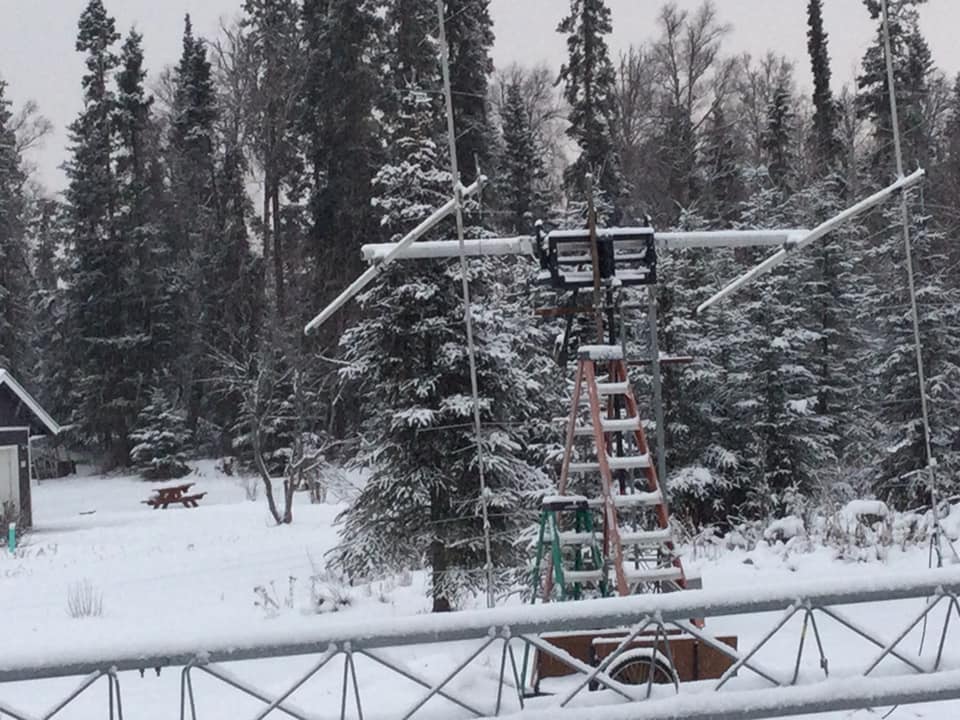
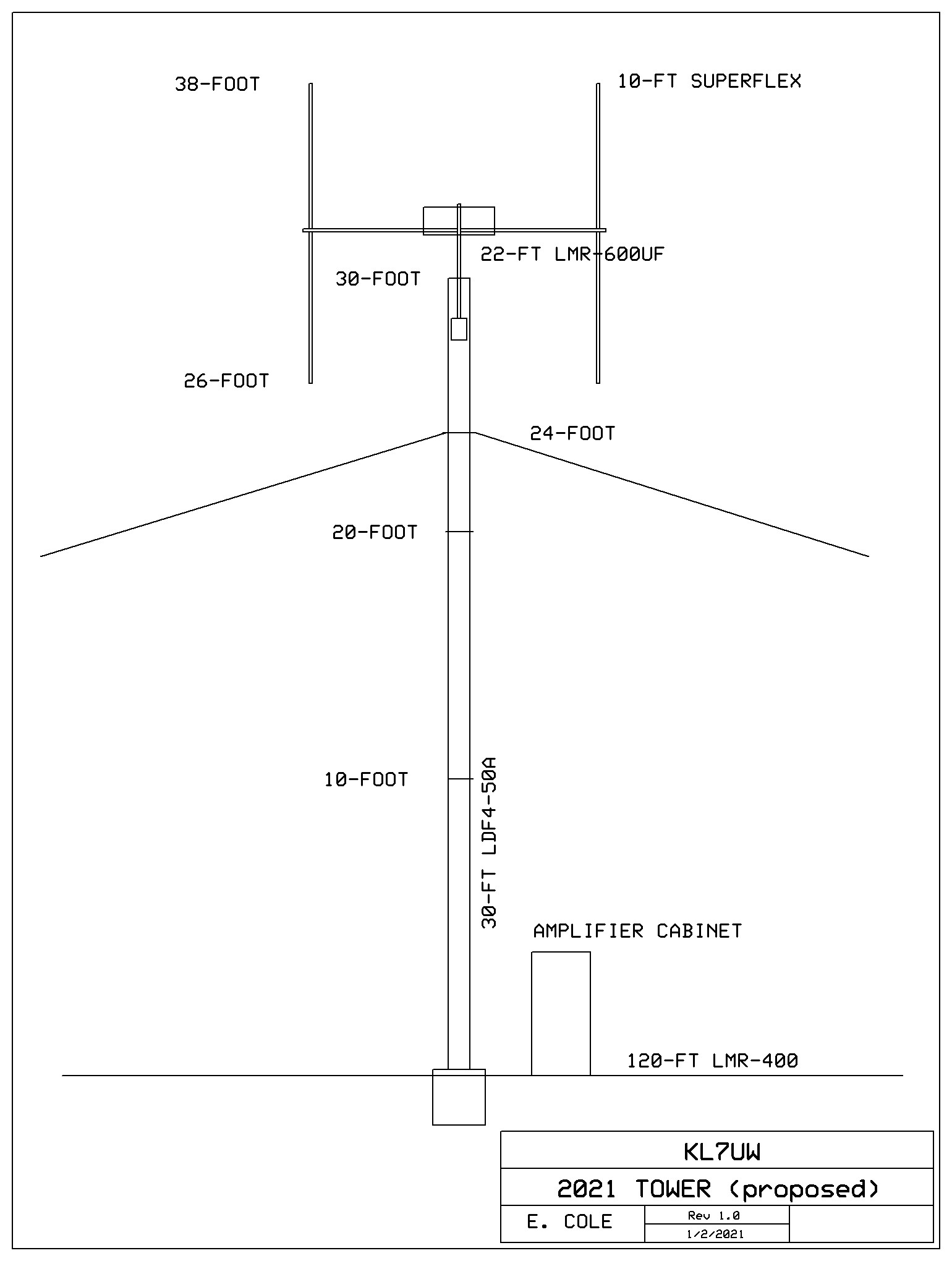
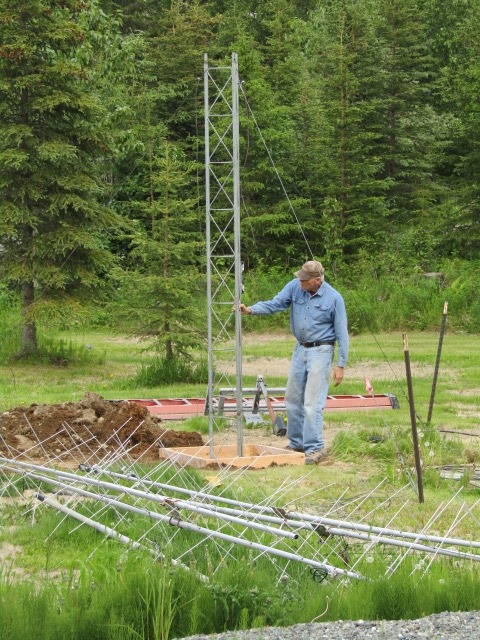

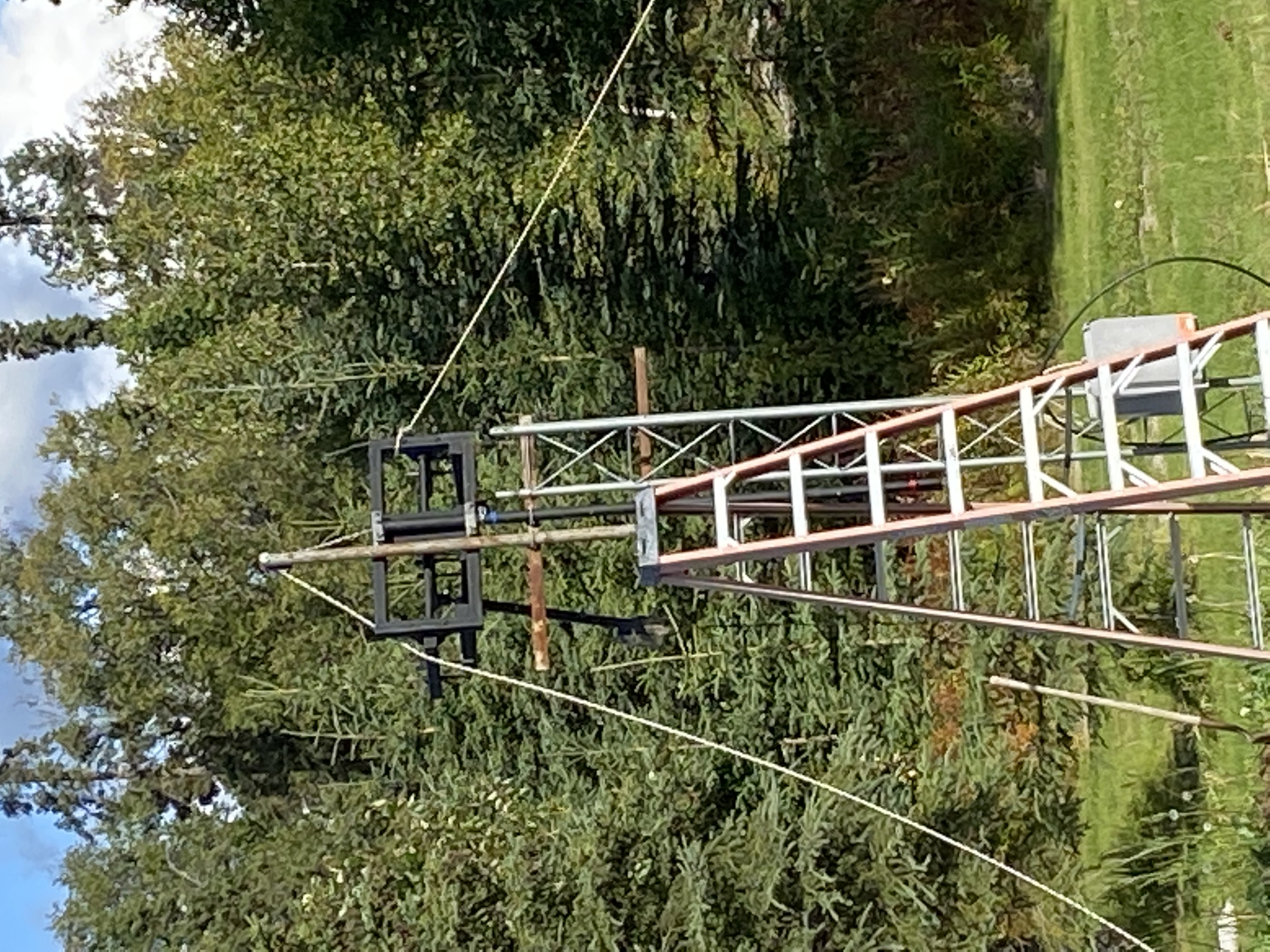 Fig. 1 Fig.2 Fig.3 Fig.4
Fig. 1 Tower Proposal for 2021
Fig. 2 Concrete form and tower base set
Fig. 3 Elevation Bracket Installed
Fig. 4 Close up of Elevation Bracket
November, 2020 - Update:
ON Nov. 2nd the eme array came down during a wind storm >55 mph damging the tower and one yagi. All yagis and the
preamp/TR enclosure have been removed. Temporary use of two KLM 11-element yagis in vertical polarity will be used
until spring 2021 when orginal arrray will be re-installed.
Specs are shown on eme-status page.
Cable loss table
photo-1 Array Down
photo-2 Array Down
June, 2020 - Update:
In spring of 2019 I installed a new Ham-IV rotator that failed a couple months later. After the June ARRL VHF Contest
Brandon-KL7BSC helped me get the array turned back to position to be lowered. I found that the four bolts holding the
rotator shell together all fell out. I decided not to use the Ham-IV and bought an Alpha-SPID RAK to replace it.
Also installed a chain sprocket gear to add a digital encoder for azimuth (later this summer).
In 2019 I discovered two of my Horz. polarity yagis had developed high SWR and were unadjustable due to corrosion.
I have replaced the driven elements in those two yagis and installed new, shorter phasing lines. Both Horz and Vert
arrays now show 1.2 SWR at 144.200 MHz. Tested both preamps and appear to be good. Next I will test my new 1500w
W6PQL amp and will be QRV for 2m eme, soon.
February, 2019 - Update:
Fig. 1 Fig.2 Fig.3 Fig.4
Fig. 1 Tower Proposal for 2021
Fig. 2 Concrete form and tower base set
Fig. 3 Elevation Bracket Installed
Fig. 4 Close up of Elevation Bracket
November, 2020 - Update:
ON Nov. 2nd the eme array came down during a wind storm >55 mph damging the tower and one yagi. All yagis and the
preamp/TR enclosure have been removed. Temporary use of two KLM 11-element yagis in vertical polarity will be used
until spring 2021 when orginal arrray will be re-installed.
Specs are shown on eme-status page.
Cable loss table
photo-1 Array Down
photo-2 Array Down
June, 2020 - Update:
In spring of 2019 I installed a new Ham-IV rotator that failed a couple months later. After the June ARRL VHF Contest
Brandon-KL7BSC helped me get the array turned back to position to be lowered. I found that the four bolts holding the
rotator shell together all fell out. I decided not to use the Ham-IV and bought an Alpha-SPID RAK to replace it.
Also installed a chain sprocket gear to add a digital encoder for azimuth (later this summer).
In 2019 I discovered two of my Horz. polarity yagis had developed high SWR and were unadjustable due to corrosion.
I have replaced the driven elements in those two yagis and installed new, shorter phasing lines. Both Horz and Vert
arrays now show 1.2 SWR at 144.200 MHz. Tested both preamps and appear to be good. Next I will test my new 1500w
W6PQL amp and will be QRV for 2m eme, soon.
February, 2019 - Update:
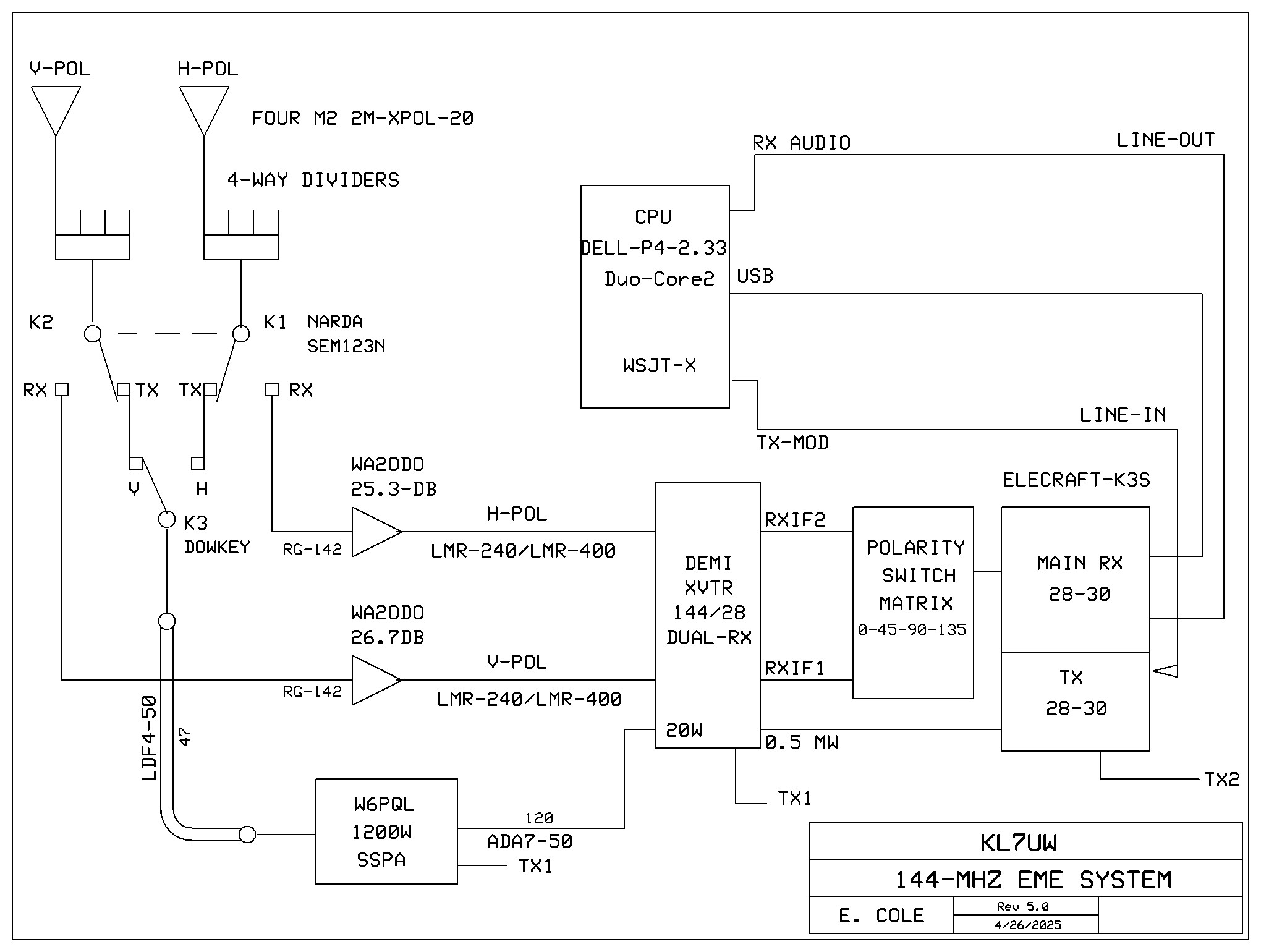
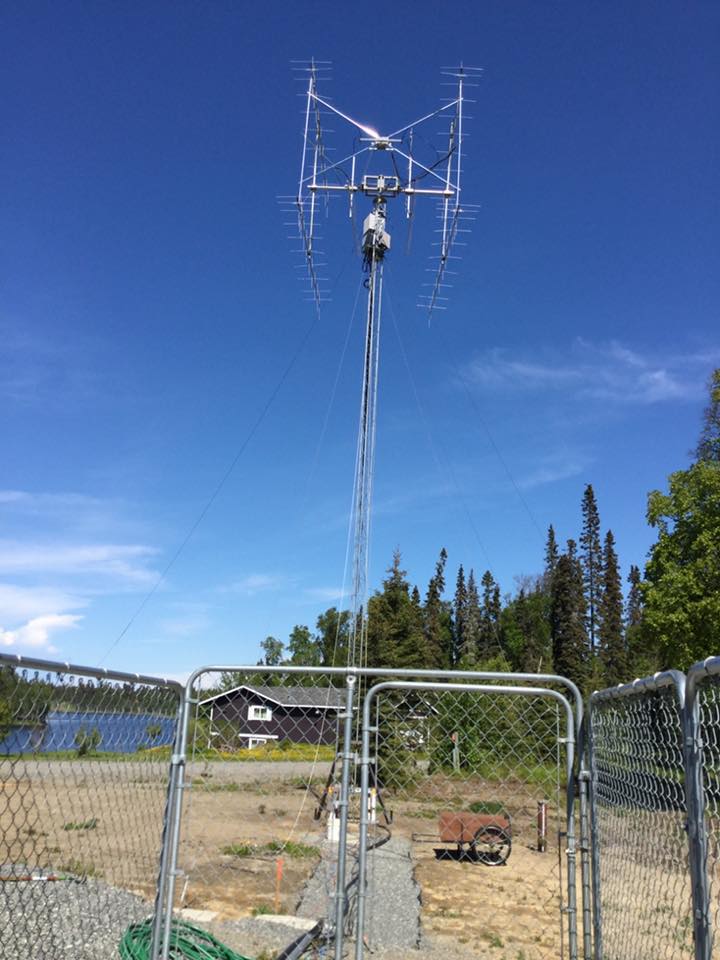
 144-MHz EME Station Block diagram showing Adaptive Polarity Reception.
May 22, 2019: Modification moving dual preamps, TR relays, and polarity relay completed, with new 10-foot phasing lines
shortened from 18-foot reduces loss ahead of preamps and reducing system NF.
144-MHz EME Station Block diagram showing Adaptive Polarity Reception.
May 22, 2019: Modification moving dual preamps, TR relays, and polarity relay completed, with new 10-foot phasing lines
shortened from 18-foot reduces loss ahead of preamps and reducing system NF.
 144 EME New LNA/TR Box schematic diagram NEW!
Cable Testing NEW!
22-foot run of LMR600UF replaced two 12-foot runs of LMR400UF reducing transmission line loss.
Relocation of 1500w amplifier from shack to tower base will lower transmission loss by nearly 0.8 dB.
Please check back as more is added on this page!
144 EME New LNA/TR Box schematic diagram NEW!
Cable Testing NEW!
22-foot run of LMR600UF replaced two 12-foot runs of LMR400UF reducing transmission line loss.
Relocation of 1500w amplifier from shack to tower base will lower transmission loss by nearly 0.8 dB.
Please check back as more is added on this page!
Return to Home Page